
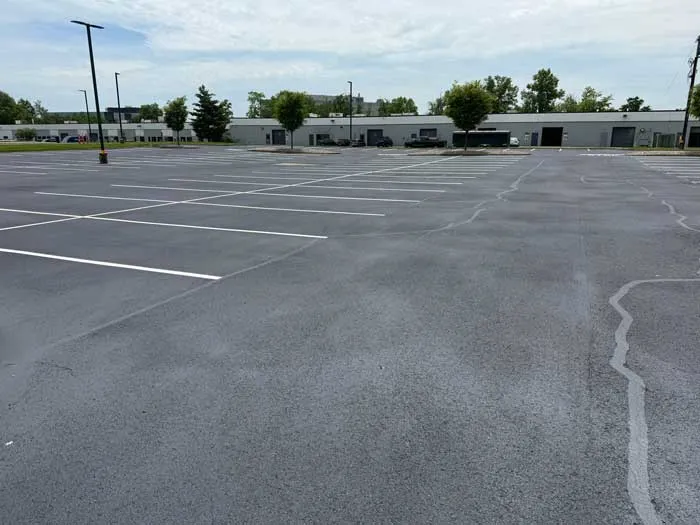
If you’re on an HOA board in Castle Rock, you already know the headaches that come with aging pavement. Cracked driveways, faded parking lots, potholes that residents won’t stop emailing about. The Front Range’s freeze-thaw cycles don’t do your asphalt any favors, and putting off repairs only makes things more expensive down the road.
This guide breaks down what Castle Rock HOA boards need to know before starting a paving project, from budgeting and timing to picking the right contractor.
Key Takeaways
- Castle Rock’s freeze-thaw cycles and clay soils accelerate pavement damage, making proactive maintenance critical for HOAs.
- Proper base preparation matters more than surface thickness. Cutting corners underneath shows up fast in Colorado’s climate.
- HOA boards should budget for both immediate asphalt repair and long-term maintenance like sealcoating and parking lot striping.
- Timing your project between late April and October gives you the best conditions for paving along the Front Range.
- Working with a local contractor who understands Castle Rock’s soil and weather conditions prevents costly mistakes.

Why Castle Rock Is Tough on HOA Pavement
Castle Rock sits at over 6,200 feet of elevation. That means intense UV exposure, wide daily temperature swings, and freeze-thaw cycles that can crack pavement faster than communities at lower elevations.
Add in the clay-rich soils common throughout Douglas County, and you’ve got ground that expands when wet and contracts when dry. That movement underneath puts constant stress on parking lots and driveways, especially if the base wasn’t built right to begin with.
For HOA properties with shared parking areas, the wear compounds quickly. Trash trucks, delivery vehicles, and resident traffic all concentrate in the same spots. Those high-traffic zones develop ruts, cracks, and potholes well before the rest of the surface shows wear.
Common Paving Issues HOA Boards Face
Most HOA paving problems come down to deferred maintenance. A small crack turns into a network of cracks. Water gets in, freezes overnight, and by spring you’ve got a pothole. Here’s what we see most often in Castle Rock communities:
Alligator cracking in parking areas where the base has weakened. This usually means the pavement needs more than a surface fix. It needs structural attention.
Drainage pooling near curbs, speed bumps, and low spots. Poor grading causes water to sit on the surface, which accelerates deterioration during freeze-thaw season.
Faded, worn striping that creates confusion and liability. If residents can’t see parking lines or fire lanes, the HOA is taking on unnecessary risk. Keeping parking lot striping fresh is one of the simplest maintenance wins.
Individual driveway deterioration across the community. Some driveways hold up while others fall apart, often because of differences in base preparation or drainage from the original build.
What a Proper HOA Paving Project Looks Like
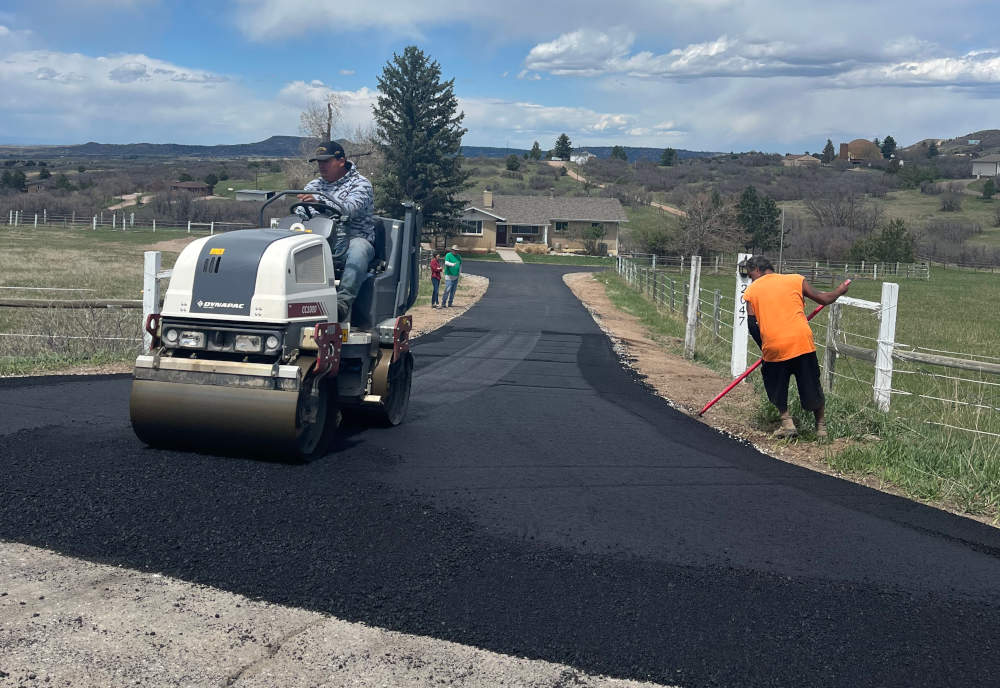
A quality paving project starts well before any asphalt is laid. Here’s the process that protects your HOA’s investment:
Assessment first
A contractor should walk the entire property and evaluate what needs full replacement versus what can be saved with an overlay or targeted repairs. Not everything needs to be torn out and redone.
Base preparation
This is where the real value is. In Castle Rock’s expansive soils, a proper aggregate base, typically 6 inches of compacted road base, is what keeps pavement stable for 15 to 25 years instead of 7 to 10. Skipping this step is the most common and most expensive mistake.
Proper thickness
For commercial parking lots, plan on 3 to 4 inches of asphalt over the base for standard traffic. Areas handling trash trucks or delivery vehicles may need 6 to 8 inches with a heavier base.
Drainage and grading
Water needs to go somewhere. Proper slope and drainage design prevent the standing water that destroys pavement from the inside out, especially through Castle Rock’s long winter.
Striping and markings
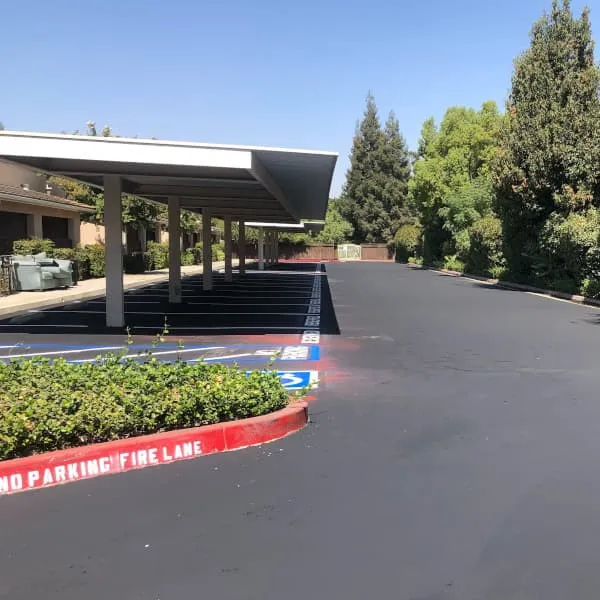
ADA-compliant spaces, fire lanes, directional arrows, and clear parking lines should all be part of the scope. This protects the HOA from liability and keeps the property looking maintained.
Budgeting and Reserve Planning
Paving is one of the largest capital expenses an HOA will face. Boards should plan for it in reserve studies and start setting aside funds well before the pavement reaches end-of-life.
A phased approach often makes the most financial sense. Address the worst areas first, maintain what’s still in good shape with sealcoating and crack filling, and schedule remaining work over two to three budget cycles.
Regular maintenance extends pavement life significantly. Sealcoating every 3 years and addressing cracks early can add 10 or more years to your asphalt’s lifespan. That’s real money back into the HOA’s reserves.
Timing Your Project
Along the Front Range, the paving season typically runs from late April through October. Asphalt needs warm ground temperatures and dry conditions to cure properly.
For HOA projects, scheduling matters even more than it does for a single driveway. You’re coordinating around resident parking, managing access to buildings, and often phasing the work so the entire lot isn’t shut down at once.
Plan to get estimates in late winter or early spring. Contractors book up fast once the season starts, and earlier scheduling gives your board time to review proposals, get board approval, and communicate the timeline to residents.
Choosing the Right Contractor
Not every paving company is equipped to handle HOA work. Community projects come with additional coordination, phased scheduling, and communication requirements that single-property jobs don’t.
Look for a contractor who has experience with multi-phase commercial projects, understands Castle Rock’s specific soil and climate challenges, and communicates clearly with board members throughout the process. Insurance, workers’ comp, and a track record of completed community work should all be on your checklist.
Frequently Asked Questions
How long does an HOA parking lot last in Castle Rock? With proper base preparation and regular maintenance, 15 to 25 years. Without maintenance, you might see significant issues in under 10 years. Colorado’s freeze-thaw cycles and UV exposure at elevation accelerate wear compared to lower-altitude locations.
Can we overlay existing asphalt instead of replacing it? Sometimes. If the base is still structurally sound and damage is limited to surface-level cracking or wear, an asphalt overlay can be a cost-effective option. But if there’s alligator cracking, significant settling, or base failure, an overlay will just mask the problem temporarily.
How should our HOA budget for paving? Include paving in your reserve study and plan for it as a capital expense. Most communities benefit from a phased approach. Budget for annual maintenance (crack sealing, sealcoating) separately from major repaving projects. A good contractor can help you prioritize which areas need attention first.
What’s the best time of year to pave Castle Rock? Late April through October, when ground temperatures are warm enough for proper asphalt curing. For HOA projects, booking a contractor in late winter gives you the best scheduling options.
Does our HOA need permits for paving work? The Town of Castle Rock may require permits depending on the scope of the project, especially if it involves changes to drainage or grading. Your contractor should be familiar with local requirements and handle the coordination.
How do we minimize disruption to residents during paving? Phased scheduling is the standard approach. A good contractor will section off the work area, maintain access to buildings and units, and communicate timelines clearly so residents can plan ahead.
Get a Plan for Your Community
If your HOA is dealing with deteriorating pavement or planning ahead for a repaving project, the first step is getting an honest assessment of what you’re working with. Riley’s Asphalt has been handling commercial paving projects across Castle Rock and the surrounding area for over 30 years. We’ll walk the property, give you a straightforward evaluation, and help you put together a plan that fits your budget and timeline.