That crack in your parking lot isn’t going away on its own. In fact, if you’re a business owner in Castle Rock, it’s getting worse every single night the temperature drops below freezing and every afternoon the sun heats it back up.
We get it. Parking lot repairs aren’t exciting. They’re easy to push to next quarter, next year, next budget cycle. But here’s what we’ve seen over 30 years of paving along the Front Range: the businesses that delay repairs almost always end up paying two to three times more than they would have if they’d handled it early.
Here’s what that actually looks like in dollars, liability, and lost customers.
Key Takeaways
- A $500 crack repair left untreated in Castle Rock’s climate can become a $5,000 to $10,000 base failure within two to three winters.
- Colorado’s freeze-thaw cycles accelerate pavement damage faster than most business owners expect, especially at Castle Rock’s 6,200-foot elevation.
- Potholes and trip hazards create real liability exposure. One slip-and-fall claim can cost more than a full parking lot repave.
- Routine maintenance like sealcoating and crack filling can extend pavement life by 10 or more years.
- A deteriorating lot sends a message to customers before they ever walk through your door.
How Small Cracks Become Big Problems in Castle Rock
Castle Rock’s climate is uniquely hard on asphalt. The town sits at over 6,200 feet, which means stronger UV exposure that oxidizes and dries out pavement faster than at lower elevations. Add in daily temperature swings that can hit 30 to 40 degrees in a single day, and the expansion and contraction alone puts constant stress on your surface.
But the real damage happens with water. A hairline crack lets moisture in. That moisture freezes overnight, expands, and widens the crack. The next day it melts, seeps deeper, and the cycle repeats. One winter of this can turn a minor surface crack into a network of interconnected damage that reaches the base layer.
Once water gets into the base, the structural integrity of the pavement is compromised. That’s when you start seeing potholes, settling, and the kind of alligator cracking that can’t be fixed with a surface patch. At that point, you’re looking at full-depth replacement instead of a simple repair.
The Financial Snowball Effect
Here’s a rough timeline of what delayed maintenance looks like financially for a typical Castle Rock commercial lot:
Year one. Small surface cracks appear. A professional crack seal at this stage might run a few hundred dollars. Most business owners notice but don’t act.
Year two to three. Cracks widen and connect. Water infiltrates the base during spring snowmelt and summer storms. The damage is still repairable, but now you’re looking at asphalt patching in multiple areas. Costs climb into the low thousands.
Year three to five. Base failure begins. Potholes form. Settling creates low spots that hold water, which accelerates everything. Sections of the lot now need full-depth removal and replacement. What was a minor maintenance item is now a capital expense.
Year five and beyond. The lot needs a full repave or major reconstruction. The base may need to be rebuilt from scratch. You’re now spending five to ten times what the original repair would have cost.
The math isn’t complicated. It just requires acting before the damage compounds.
Liability You Can’t Afford to Ignore
A cracked, potholed parking lot isn’t just an eyesore. It’s a liability issue.
Trip-and-fall lawsuits are among the most common claims commercial property owners face. In Colorado, business owners have a duty to maintain safe premises. A customer who trips over a pothole or uneven pavement has grounds for a claim, and settlements for parking lot injuries routinely run into five and six figures.
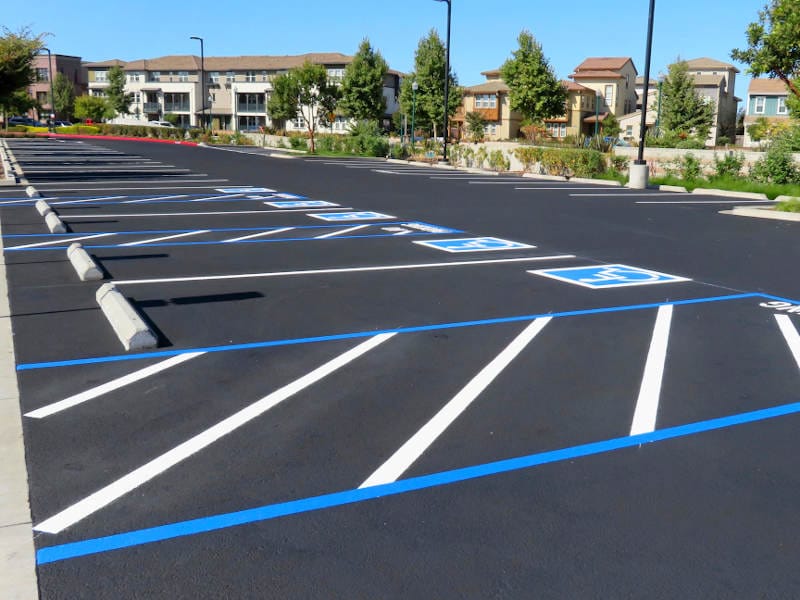
Faded or missing lot striping adds to the risk. If ADA-compliant spaces, fire lanes, and pedestrian crossings aren’t clearly marked, you’re exposed on multiple fronts. That’s not a hypothetical. It’s a code compliance issue that the Town of Castle Rock takes seriously.
Keeping your lot in good condition and your markings visible is one of the simplest ways to reduce liability exposure.
What It’s Costing You in Customers
First impressions matter. Your parking lot is literally the first thing customers interact with when they visit your business.
A lot full of cracks, potholes, and faded lines tells people something about how you run your operation. Fair or not, customers associate the condition of your exterior with the quality of your product or service. A restaurant with a neglected lot. A medical office with potholes at the entrance. A retail store where the striping has disappeared. Each one sends a signal that works against you before a customer ever walks in.
On the flip side, a clean, well-maintained lot with fresh sealcoating and crisp striping communicates that you pay attention to details. It’s a small thing that makes a real difference in how your business is perceived.
What Proactive Maintenance Actually Looks Like
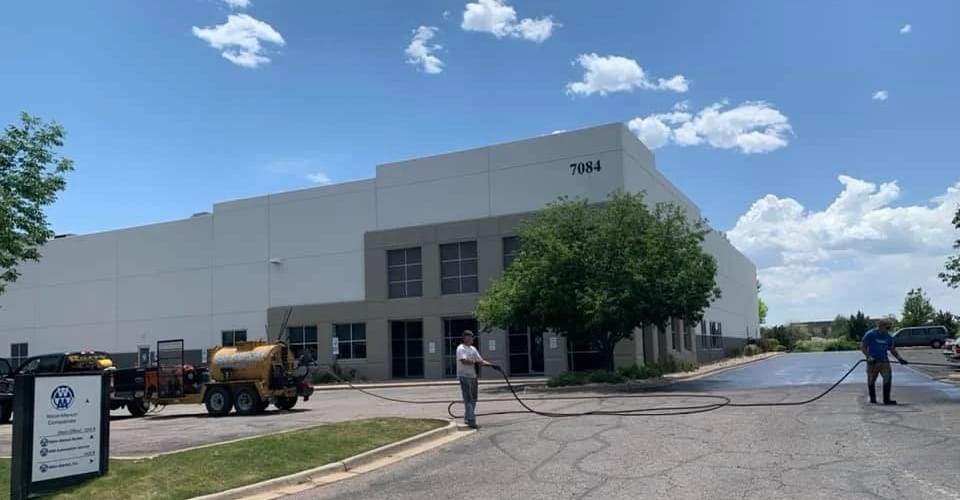
You don’t need to repave every few years. You need a maintenance plan that keeps small problems from becoming big ones. Here’s what that looks like in Castle Rock’s climate:
Crack sealing annually or as needed. Fill cracks before winter so water can’t get in and start the freeze-thaw cycle underground. This is the single most cost-effective thing you can do for your lot.
Sealcoating every three years. A fresh seal coat protects against UV oxidation, water infiltration, and chemical damage from oil and fuel. It also makes your lot look new, which is a bonus for curb appeal.
Patching and spot repairs. When damage does occur, address it quickly. A hot asphalt patch done right can add years of life to a damaged section without touching the rest of the lot.
Striping and markings on a regular cycle. Colorado’s UV and snowplow wear fade striping faster than in lower-elevation areas. Keeping lines fresh isn’t just about looks. It’s about safety and compliance.
Full condition assessments. Have a contractor walk your lot once a year and give you an honest evaluation. Knowing what’s coming lets you budget for it instead of getting hit with an emergency.
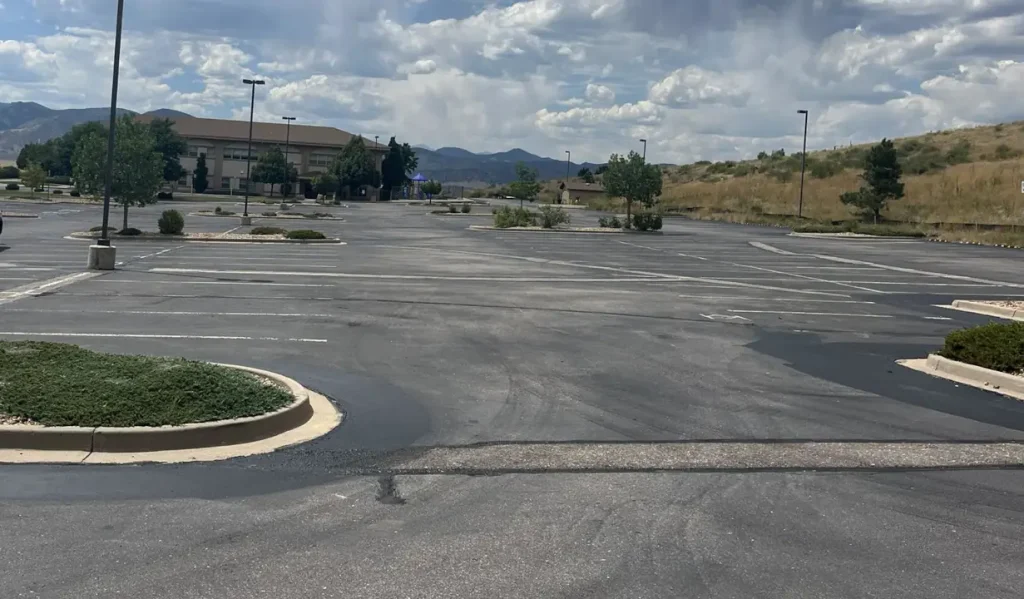
When Repair vs. Replacement Makes Sense
Not every damaged lot needs to be torn out. Here’s a quick decision framework:
Repair makes sense when surface cracking is isolated, the base is still firm, drainage is functioning, and damage is limited to specific areas. Patching, crack sealing, and overlays can handle this.
Replacement makes sense when you’re seeing widespread alligator cracking, multiple areas of base failure, significant settling or drainage problems, or the lot is over 20 years old with no major maintenance history. At that point, patching is just throwing money at a surface that’s failing from underneath.
A good contractor will tell you honestly which approach makes sense for your situation instead of pushing you toward the most expensive option.
The Castle Rock Factor
Castle Rock’s growth has brought more traffic, more commercial development, and more demand on existing infrastructure. Lots that were built 10 or 15 years ago are now handling more vehicles than they were designed for. Areas near delivery zones and dumpster pads take an especially heavy beating from trucks and service vehicles.
The clay-rich soils throughout Douglas County add another layer of complexity. When the ground underneath shifts with moisture changes, it puts stress on the pavement above. Proper base preparation accounts for this, but many older lots weren’t built with today’s standards in mind.
All of this means Castle Rock commercial lots need more attention, not less, as they age.
Frequently Asked Questions
How do I know if my parking lot needs repairs or full replacement?
Look at the type of damage. Isolated cracks and small potholes usually mean repairs. Widespread alligator cracking, base failure, or significant settling usually mean it’s time for replacement. The best approach is to have a commercial paving contractor assess the lot and give you an honest recommendation.
How much does it cost to repair a parking lot in Castle Rock?
It varies widely depending on the scope. Crack sealing might run a few hundred dollars. Patching and spot repairs typically fall in the low thousands. A full repave for a commercial lot can be a significant capital expense. The key takeaway is that early intervention is always cheaper than waiting.
How often should I sealcoat my commercial parking lot?
Every three years on average. Lots with heavy traffic or more sun exposure may benefit from a slightly more frequent schedule. Castle Rock’s elevation means stronger UV, so sealcoating is especially important here.
Can I do parking lot repairs in winter?
Most paving and sealcoating work needs warm ground temperatures to cure properly. The paving season along the Front Range typically runs from late April through October. However, some emergency patching can be done in colder months using cold mix asphalt as a temporary fix until permanent repairs can be scheduled.
Will repairs disrupt my business?
A good contractor will phase the work to keep your business accessible. Sections of the lot can be cordoned off while others remain open. Most repair and sealcoating projects for standard commercial lots can be completed in one to two days.
Does the Town of Castle Rock require commercial properties to maintain their parking lots?
Castle Rock’s municipal code addresses property maintenance standards, and the Town’s code compliance division enforces regulations related to property upkeep. Neglected commercial properties can face enforcement action, so staying on top of maintenance protects you from that angle as well.
Stop the Damage Before It Compounds
If your parking lot is showing signs of wear, the most expensive decision you can make is to do nothing. Riley’s Asphalt has been handling commercial paving and maintenance across Castle Rock for over 30 years. We’ll walk your lot, tell you what needs attention now and what can wait, and put together a plan that makes sense for your budget.