
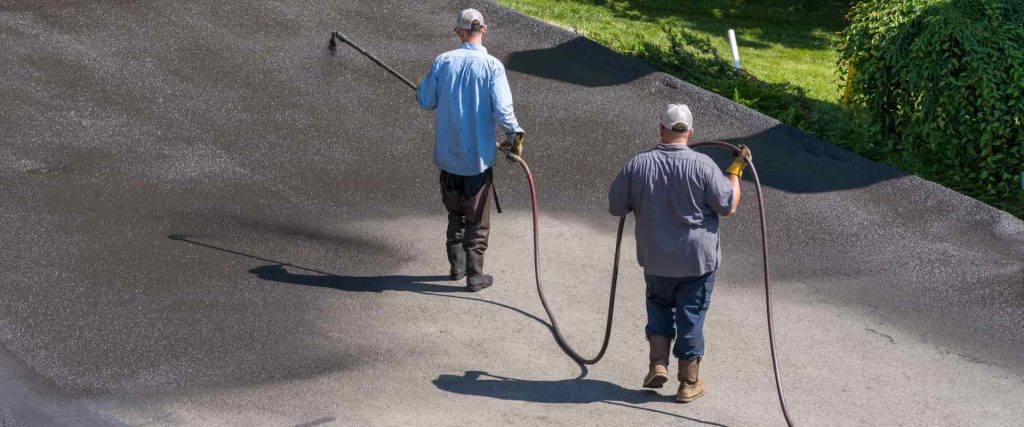
Wait 6 to 12 months after paving before applying the first sealcoat to a new parking lot in Castle Rock, then schedule the work between mid-May and late September. This window gives the asphalt time to cure and aligns with Castle Rock’s overnight temperatures staying above 50°F, the threshold sealcoat needs to bond properly.
Castle Rock sits at 6,224 feet elevation and averages 78 inches of snow per year, more than 2.5 times the U.S. average of 28 inches. That punishing freeze-thaw cycle, combined with 243 sunny days of intense UV exposure, makes sealcoating one of the most important maintenance steps you can take to protect a new parking lot investment.
Riley’s Asphalt has been paving and sealcoating parking lots across Castle Rock and Douglas County for more than 30 years. Below is the same timing guidance the team uses on every commercial project, backed by industry standards and local climate data.
How Long Should You Wait Before Sealcoating a New Asphalt Parking Lot?
Wait a minimum of 90 days, with 6 to 12 months being the industry-recommended sweet spot. Fresh asphalt contains lightweight oils that need to evaporate before sealant can bond to the surface.
According to industry guidance from asphalt maintenance suppliers, sealing too early traps these oils and prevents the pavement from fully oxidizing. The result is a soft, scuff-prone surface that shows tire marks, power-steering scars, and early cracking.
On the flip side, waiting beyond 12 months means the asphalt loses its protective binder to UV exposure and oxidation. By 18 months without a sealcoat, raveling and surface micro-cracks typically begin in Colorado’s harsh climate.
The 90-Day Minimum vs. 6-Month Best Practice
The 90-day figure is the absolute floor. Riley’s Asphalt recommends 6 months for most Castle Rock commercial lots and a full year for high-traffic retail or HOA properties.
This extra cure time matters more in Colorado than in milder states. Higher elevation means thinner air, faster UV exposure, and wider daily temperature swings, all of which accelerate the asphalt’s curing process while also stressing the surface.
What Is the Best Time of Year to Sealcoat in Castle Rock?
The optimal sealcoating window in Castle Rock runs from mid-May through late September. During this stretch, daytime highs reach 70-83°F and overnight lows stay above the critical 50°F threshold required for proper sealant cure.
June, July, and August are the peak months. These three months deliver the most reliable combination of warm pavement temperatures, low precipitation, and long daylight hours for application crews.
April and early May are risky because of unpredictable snowstorms. October sealcoat jobs can succeed in warm years but carry weather-related rescheduling risk as Castle Rock’s first freeze typically hits between October 5 and October 15.
Castle Rock Sealcoating Calendar at a Glance
| Month | Sealcoating Suitability | Notes |
| Jan – Apr | Not recommended | Overnight temps drop below 20°F. Snow and ice make application impossible. |
| May | Conditional | Late May is workable. Watch the 7-day forecast for late spring snow. |
| Jun – Aug | Ideal | Peak window. Pavement temperatures consistently above 70°F. Book early as schedules fill 4-6 weeks out. |
| Sep | Good | Reliable through mid-month. Cure times extend in the back half as nights cool. |
| Oct – Dec | Not recommended | First freeze hits October 5-15 on average. Sealcoat will not bond below 50°F. |
Why Castle Rock’s Climate Makes Sealcoat Timing Critical
Castle Rock experiences over 100 freeze-thaw cycles per year, far above the national average. Each cycle expands and contracts the pavement, and water trapped in unsealed asphalt creates internal cracks every time it freezes.
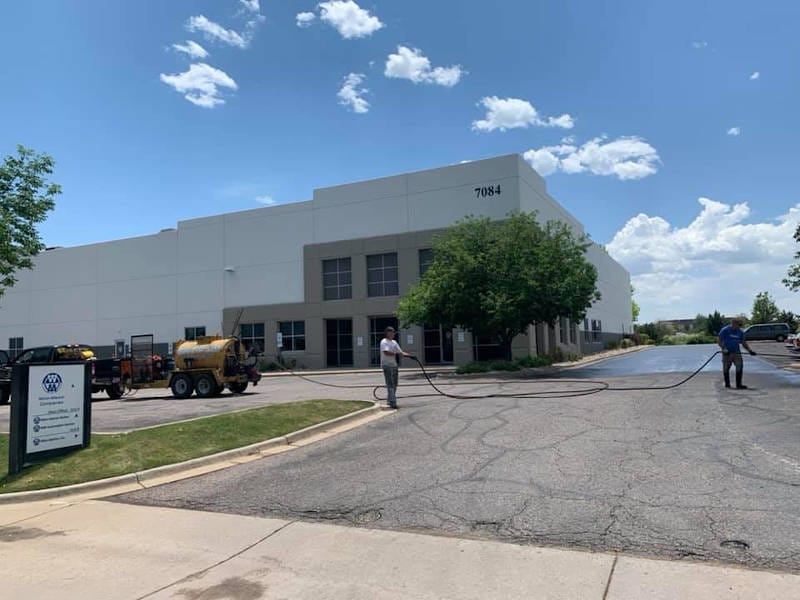
Climate data from BestPlaces shows Castle Rock averages 78 inches of snow annually compared to the U.S. average of 28 inches. The town also receives 243 sunny days per year, which sounds pleasant but delivers high-intensity UV that breaks down asphalt binder at elevation.
This combination of moisture intrusion, temperature swings, and UV exposure is precisely what sealcoat protects against. Skipping the first sealcoat or applying it at the wrong time leaves a parking lot exposed during its most vulnerable period.
The Three Threats Sealcoat Blocks
- Water infiltration that freezes, expands, and cracks the pavement from within
- UV radiation that oxidizes and embrittles the asphalt binder over 6-12 months
- Petroleum spills, deicers, and chemicals that dissolve the binder and create soft spots
Temperature and Weather Requirements for Sealcoating
Sealcoat application requires pavement temperatures of at least 50°F, air temperatures of 50°F or higher for 24 hours after application, and no rain in the forecast for 24-48 hours. Violating any of these conditions ruins the bond and shortens the sealcoat’s service life by 50% or more.
| Condition | Minimum Threshold | Ideal Range |
| Pavement temperature | 50°F | 70-95°F |
| Air temperature (24 hrs) | 50°F sustained | 65-85°F |
| Humidity | Below 90% | 40-60% |
| Rain forecast | None for 24 hrs | None for 48 hrs |
| Wind speed | Under 15 mph | Under 10 mph |
Castle Rock’s afternoon thunderstorms during July and August are the biggest scheduling challenge. Professional crews monitor National Weather Service radar in real time and start jobs early in the morning to give sealant 4-6 hours of cure before storms typically roll in.
Signs Your New Parking Lot Is Ready for Its First Sealcoat
Your new asphalt is ready for sealcoat when you see these four signs together:
- The color has faded from jet-black to a dull gray-brown across the entire surface.
- The surface feels firm underfoot. Heels no longer leave imprints, and tire marks from turning vehicles have stopped appearing.
- No visible oil sheen remains on the pavement after rain.
- At least six months have passed since installation, with most of that time during the warmer months.
If you paved in late fall, the cure clock effectively pauses during the cold months because oxidation slows dramatically below 50°F. A November pour realistically should not be sealcoated until at least the following June.
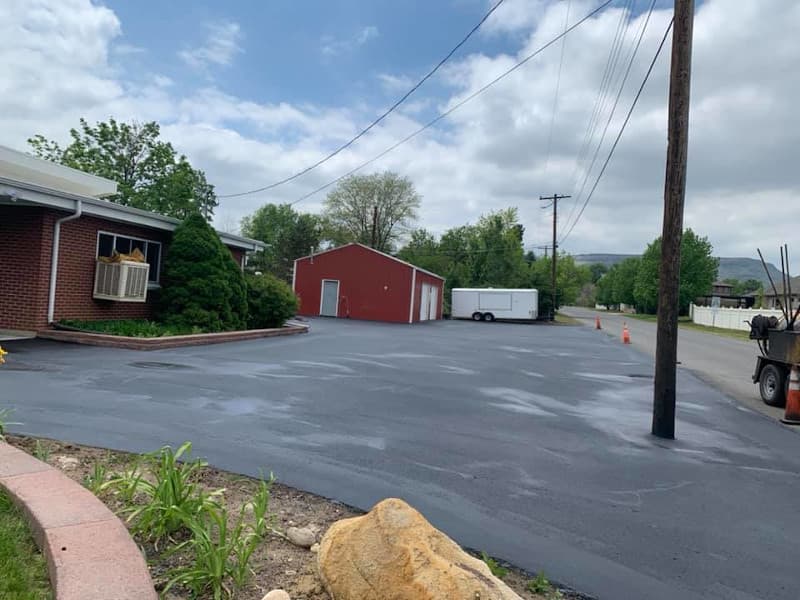
How Often Should You Sealcoat a Parking Lot After the First Application?
Most Castle Rock commercial parking lots need sealcoating every 2-3 years, while high-traffic retail and gas station lots benefit from annual or 18-month cycles. The right interval depends on traffic volume, vehicle weight, and how much winter deicer the lot absorbs.
| Lot Type | Recommended Cycle | Cost Justification |
| HOA / multi-family | Every 3 years | Sealcoating extends lot life from 15 to 25+ years |
| Office / professional | Every 2-3 years | Curb appeal and slip-fall liability reduction |
| Retail / restaurant | Every 18-24 months | High traffic plus chemical spills accelerate wear |
| Industrial / heavy truck | Every 12-18 months | Point loads and oil drips break down binder fast |
| Gas station / convenience | Annually | Constant fuel exposure dissolves untreated asphalt |
What Happens If You Sealcoat Too Early?
Applying sealcoat before the asphalt has cured produces five predictable problems:
- Trapped lightweight oils that keep the pavement soft and pliable indefinitely
- Tire scuffing and power-steering tears in the surface during the first hot summer
- Imprints from dumpster wheels, kickstands, and trailer jacks
- Poor sealant adhesion that flakes off in sheets within 12-18 months
- Wasted spend, since a failed sealcoat typically needs to be redone within 2 years
Industry research from asphalt maintenance suppliers confirms that early sealcoating is the leading cause of premature parking lot failure on new construction. The fix is straightforward: wait the full cure period.
What Happens If You Wait Too Long?
Skipping the first sealcoat for more than 18 months in Castle Rock’s climate leads to visible damage that costs significantly more to repair than to prevent.
- Oxidation turns the surface from black to gray within 12-18 months without sealcoat
- Raveling, where fine aggregate works loose from the binder, begins around 18-24 months
- Hairline cracks open after the first unprotected winter, accelerating water intrusion
- Full-depth cracks and potholes can appear by year 3-4 in unsealed lots
Once cracking begins, sealcoat alone cannot reverse the damage. The lot needs crack sealing first, then sealcoating, which can double the maintenance cost compared to staying on schedule from the start.
Frequently Asked Questions
Can you sealcoat a new parking lot in the fall in Castle Rock?
Sealcoating is possible through mid-September in Castle Rock but risky after that. Once overnight temperatures fall below 50°F, the sealant cannot cure properly and will fail within months. If your lot was paved in summer and reaches its 6-month mark in November, plan the first sealcoat for the following May or June rather than rushing a fall application.
How long after sealcoating can vehicles drive on a parking lot?
Allow 24 hours minimum for foot traffic and 48 hours before reopening to vehicle traffic. In cooler or more humid conditions, extend that to 72 hours. Heavy vehicles like delivery trucks and trash haulers should wait a full 72 hours regardless of weather to prevent tire imprints and lift marks.
Is sealcoating worth it for a small business parking lot in Castle Rock?
Yes. A properly sealcoated lot lasts 25+ years compared to 12-15 years for an unsealed lot in Colorado’s freeze-thaw climate.
Do you need to crack seal before the first sealcoat on a new parking lot?
Usually no, if the lot was paved correctly and is within the 6-12 month window. New asphalt should not have meaningful cracks yet. If hairline cracks have appeared, crack sealing should be done first because sealcoat alone bridges only the smallest surface imperfections.
What is the difference between sealcoating and paving a new parking lot?
Paving installs the asphalt surface itself, typically 3-4 inches thick over a 6-inch aggregate base for light-duty commercial lots. Sealcoating applies a thin protective layer, usually 1/8 inch thick, over already-cured asphalt to shield it from UV, water, and chemicals. Sealcoating is maintenance, not construction.
Can it be too hot to sealcoat in Castle Rock?
Pavement temperatures above 140°F can cause sealcoat to dry too fast and not bond properly. On Castle Rock’s hottest July afternoons, pavement can hit 150°F in direct sun. Professional crews schedule applications for morning or late afternoon during heat waves and may pre-wet the surface to bring temperatures into the ideal 70-95°F range.
Related Riley’s Asphalt Resources
- Castle Rock Commercial Sealcoating Services
- Castle Rock Commercial Paving and Parking Lot Construction
- Castle Rock Driveway Paving for Residential Properties
- Riley’s Asphalt Service Area Across Douglas County
- About Riley’s Asphalt: 30+ Years Serving Castle Rock
- More Asphalt Maintenance Tips on the Riley’s Blog