
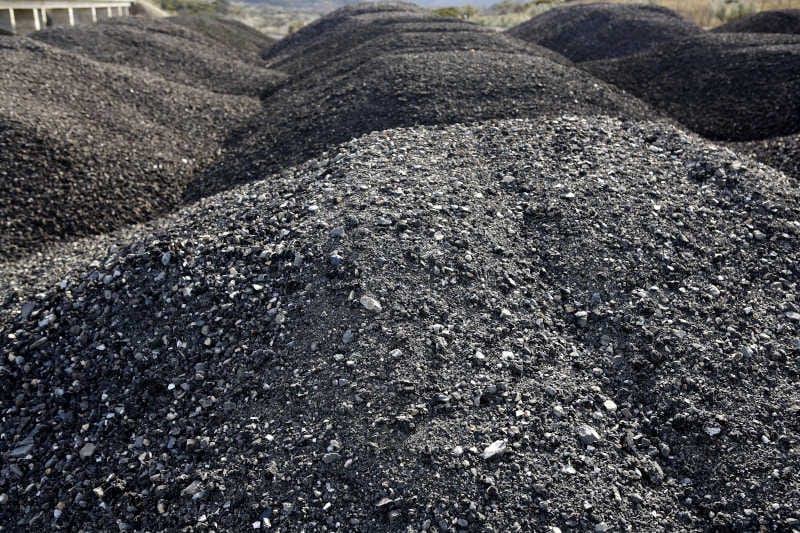
Yes, you can use asphalt millings for a driveway in Douglas County, Colorado. Millings are an accepted all-weather surfacing material for residential driveways, and the County itself uses recycled asphalt pavement to upgrade gravel roads. You will still need a driveway permit before you build, and any portion of the drive inside the County right-of-way must meet specific thickness and grade standards.
Asphalt millings, also called recycled asphalt pavement (RAP), are the ground-up remains of old roads and parking lots. They compact into a firm, dust-controlled surface for a fraction of the cost of new hot-mix asphalt. For a rural Douglas County property, that combination of durability and value is hard to beat.
At Riley Asphalt, we install asphalt millings driveways throughout Douglas County, including Parker, Castle Pines, and Larkspur. Here is what you need to know, and we are always happy to give you a free quote for your specific property.
Are Asphalt Millings Allowed for Driveways in Douglas County?
Asphalt millings are allowed as a driveway surface in Douglas County, and the County treats them as a recognized step above loose gravel.
Douglas County’s own Gravel Road Paving Program states that the County may first improve a road using reclaimed or recycled asphalt pavement, noting this surface performs better than gravel and helps reduce dust, rutting, washboarding, and mud. If it is good enough for public roads, it is a sound choice for a private driveway.
The important distinction is where the millings go. Douglas County regulates the section of any driveway that sits inside the County right-of-way (ROW), which is the public land strip along a road. Beyond the ROW, on your own property, you have far more freedom in material choice.
Right-of-Way vs. Private Property Rules
Here is how Douglas County standards break down by driveway zone:
| Driveway Zone | What the County Requires | Millings Allowed? |
|---|---|---|
| Within County ROW(connection to road) | An all-weather surface. Hard surfaces like concrete and asphalt must be a minimum 5 inches thick and sit level with or slightly below the road. | Yes, as an all-weather surface. Verify depth with the County. |
| ROW crossing a gravel road | No concrete or asphalt approaches or cross pans are allowed at the ditch crossing onto a gravel road. | Compacted millings function as aggregate; confirm with Public Works. |
| Private property(past the ROW) | A minimum 12-foot-wide all-weather driving surface to the structure, able to support fire apparatus. | Yes. Millings are an ideal all-weather surface here. |
According to the Douglas County Typical Driveway Regulations, every residential driveway must provide an all-weather surface year round. Properly compacted asphalt millings satisfy that standard. If you are weighing options, our gravel driveway to recycled asphalt guide covers the trade-offs in detail.
Do You Need a Permit for an Asphalt Millings Driveway?
Yes, most new driveways in unincorporated Douglas County require a driveway permit, regardless of the surface material. The permit is tied to the access point where your driveway meets a public or private road, not to the millings themselves.
Per the Douglas County Building Division, properties are evaluated for driveway access, building site location, and wildfire mitigation before a building permit is issued. All single-family residential driveway permits are issued through the County Building Division.
Key Permit Facts to Know
- Where to apply: all single-family residential driveway permits are issued through the Douglas County Building Division.
- Wildfire review: an on-site assessment may place your property in a wildfire hazard area, which adds a defensible-space inspection to the process.
- Staking deadline: you must post the address and stake the driveway centerline and home corners within 24 hours of applying.
- Form inspection: required only when asphalt or concrete is used in the ROW. A gravel-style millings surface may avoid this step, but confirm with the County.
- Existing drives: a permit is also required to pave or resurface an existing gravel drive within the County ROW.
We handle this process for our clients every week, so we know the County’s requirements inside out. Confirming your access classification and required depth before any material arrives prevents a Stop Work order and avoids tearing out non-compliant work.
Not sure a millings drive is the right call for your property? Reach out to our team and we will walk your site, confirm the permit path, and give you a free, honest assessment of your options.
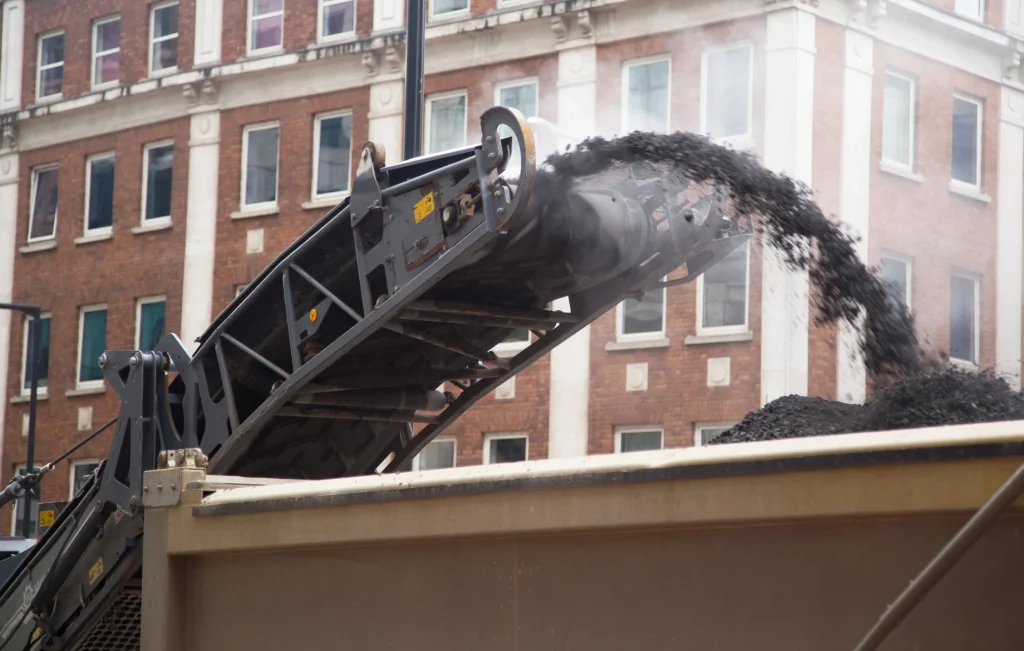
What Does an Asphalt Millings Driveway Cost in Douglas County?
Every driveway is priced on its own, so we give you a free, no-obligation quote rather than a guess off a chart. Your total depends on the length and width of the drive, the depth of millings you need, the amount of grading and drainage work, and the condition of your existing surface.
What we can promise is value. Recycled asphalt millings deliver a firm, all-weather surface for a fraction of what new hot-mix asphalt or concrete costs, which is exactly why so many Douglas County homeowners choose them over a fresh pour.
Rural lots across the County tend to have long drives, so the single biggest factor in your estimate is usually total square footage. We walk the site, measure it, and factor in grading, base prep, and haul distance before we quote a number. No surprises once work begins.
Ready for an exact figure? Request your free quote and we will assess your property and give you a clear, itemized estimate.
Benefits of Asphalt Millings Driveways for Douglas County Properties
Asphalt millings deliver the best balance of value, durability, and low maintenance for the rural and semi-rural lots we serve across Douglas County. They hold up to Colorado’s freeze-thaw cycles far better than loose gravel.
- Dust and mud control. Compacted millings bind into a firm surface that cuts the dust and spring mud that plague gravel driveways.
- Self-healing binder. The residual bitumen in RAP reactivates under summer heat and traffic, helping the surface knit tighter and harden over time.
- Strong environmental profile. Millings are 100% reclaimed material. The National Asphalt Pavement Association reports the industry returned 93% of recovered asphalt to new pavements in 2022, keeping it out of landfills.
- Excellent drainage. The dense-graded surface sheds water well, which matters during Front Range storm runoff.
- Low upkeep. Unlike gravel, millings resist washboarding and rutting, so you regrade far less often.
Recycled asphalt is also one of the greener paving choices available, a point we cover in our article on asphalt as an eco-friendly option.
The Trade-Offs to Know
Millings are not flawless. The finished surface is rougher than new hot-mix asphalt and will not look as refined. Color starts as a dark gray-brown and darkens with time rather than giving a jet-black finish. On steep grades, a proper base and compaction are essential to prevent movement, which is where professional installation pays off. For most Douglas County driveways we build, these are minor trade-offs against the value millings deliver.
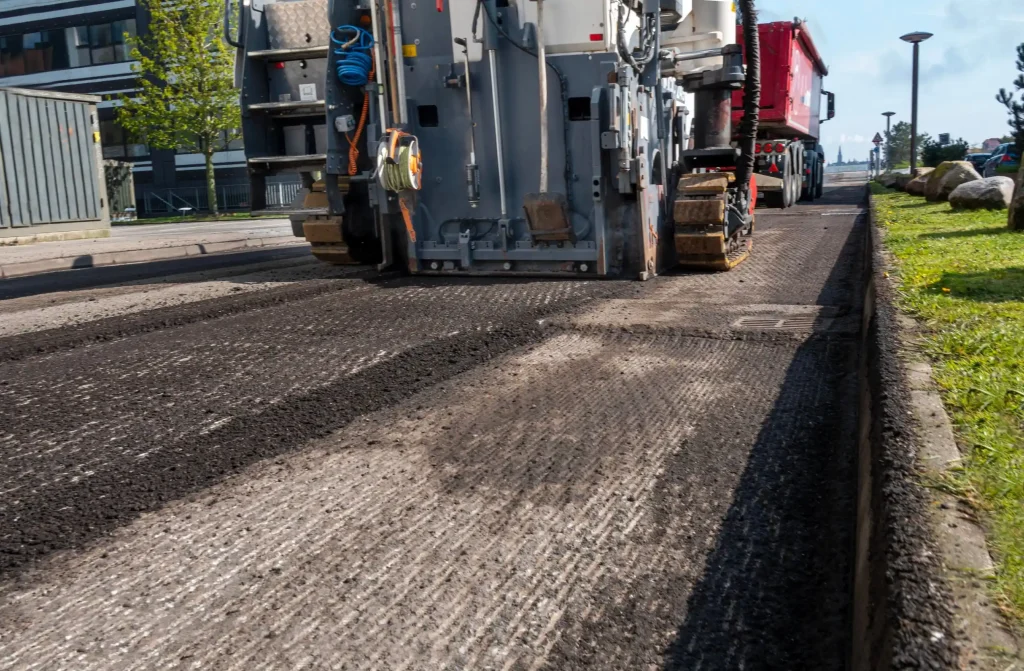
How We Install Asphalt Millings Driveways
We install a millings driveway by grading the base, spreading the material in lifts, and compacting it with a roller so the residual binder locks the surface together. Done correctly, the result is a firm, near-paved surface.
- Secure the permit and stake the site. We apply through the County, then post the address and stake the centerline within 24 hours.
- Prepare a stable base. We grade for drainage and lay a compacted aggregate base, typically class 6, where the sub-grade is soft.
- Spread millings to depth. We place 3 to 4 inches of compacted millings for a residential driveway, applied in even lifts.
- Compact thoroughly. We roll the surface so the bitumen binds. Compacting on a warm day improves bonding.
- Pass the ROW inspection if required. For any hard-surface connection in the right-of-way, we schedule the County form inspection.
A residential installation typically takes 1 to 3 days depending on driveway length and site prep, and the surface continues to harden over the following weeks of use. See our full dirt driveway to asphalt conversion project profile for a real Colorado example of our work.
Frequently Asked Questions
Can you seal or sealcoat an asphalt millings driveway?
Yes, and it sharpens the look while binding loose fines. A coat of asphalt emulsion or a rejuvenator applied after the surface has fully compacted locks the top layer, darkens the color toward black, and cuts stray gravel. Wait until the millings have set for several weeks of traffic first, then reapply every two to five years as the surface wears.
Do asphalt millings hold up to snow plowing in Douglas County winters?
They hold up better than gravel but need care. A metal plow blade can scrape and scatter a loose or under-compacted millings surface, so a plow with rubber or poly edge guards or raised shoes is best. A well-compacted drive that has bonded over a warm season resists blade damage far more than fresh millings, which is why timing your install for late spring or summer matters on the Front Range.
Will asphalt millings track into my garage or stick to tires?
Minimal tracking occurs once the surface is properly compacted and the residual binder sets. Loose fines on a fresh install can carry indoors for the first few weeks, but this fades as traffic knits the surface together. A thin topcoat of clean millings or a light seal eliminates nearly all tracking.
What is the best time of year to install a millings driveway in Colorado?
Late spring through early fall is ideal, when daytime temperatures reach 70 degrees Fahrenheit or higher. Heat is what reactivates the residual asphalt binder so the millings bond into a firm surface under the roller. Installing in cold weather leaves the material loose and slow to set, which is a real factor given Douglas County’s elevation and short warm season.
Can I install asphalt millings myself, or do I need a contractor?
A DIY install is possible for a short, flat drive if you can rent a vibratory roller, but results depend almost entirely on grading, moisture, and compaction. Poor compaction is the top reason a millings driveway ruts or washes out. For long rural drives, sloped sites, or any section inside the County right-of-way that needs a form inspection, our crew protects both the finished result and your permit.
Do asphalt millings work for a steep or sloped driveway?
Yes, with the right base and compaction, though grade limits apply. Douglas County caps driveway slope at specific thresholds, so the design must comply first. On steep runs, a thicker compacted aggregate base and heavier rolling keep the surface from migrating downhill, and adding a seal coat helps lock steep sections in place.