
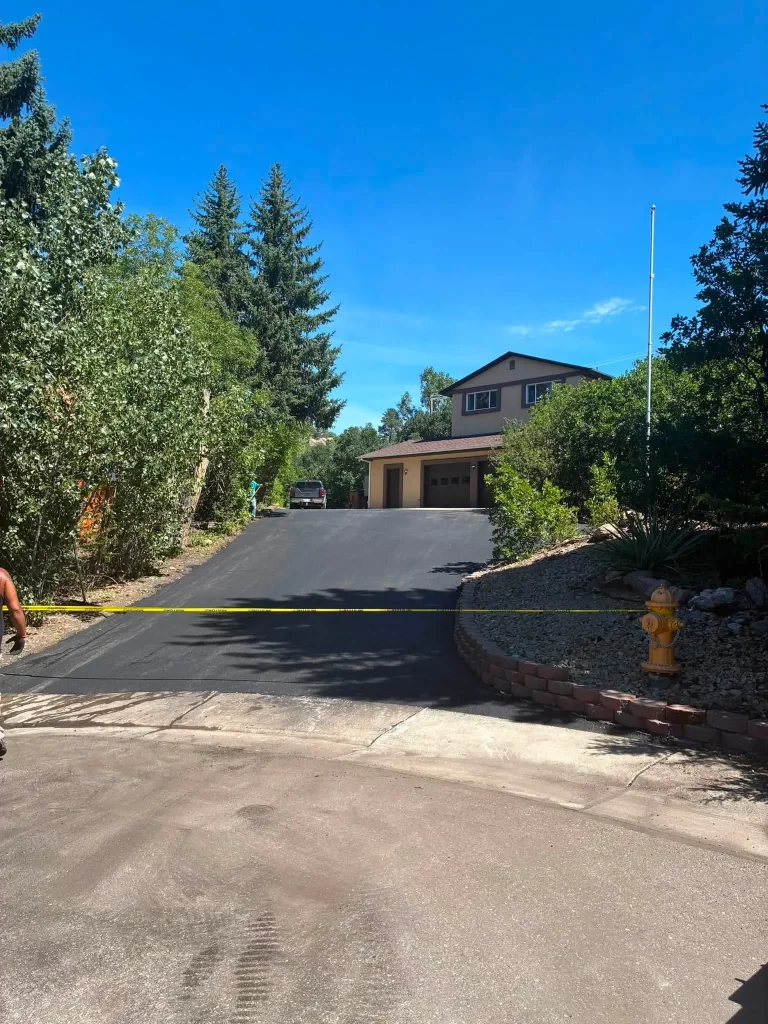
A new 5,000 square foot driveway in Castle Rock generally falls into three price bands: roughly $5,000 to $7,000 for gravel, $6,500 to $8,500 for recycled asphalt, and $14,000 to $16,000 for hot mix asphalt. Those figures assume a reasonably straightforward site with usable access and no major drainage work.
Treat them as planning ranges, not quotes. Two properties on the same Douglas County road can price thousands of dollars apart once grade, soil, and site prep enter the picture.
Five thousand square feet is a large driveway. A standard two-car residential drive covers around 480 square feet, so this is roughly ten times that, the kind of long approach common on acreage in Franktown, Sedalia, and Larkspur.
Riley’s Asphalt has been building driveways across Castle Rock and Douglas County for more than 30 years, and installs all three of these surfaces. What follows is the same cost framework the team walks homeowners through before writing an estimate.
Pricing note: every number in this article is a planning range based on typical Front Range conditions in 2026. Material costs, fuel, and haul distances move throughout the season. A site visit is the only way to get a firm number for your property.
Driveway Cost Comparison at a Glance: Castle Rock, 2026
Here is how the three surfaces compare on a 5,000 square foot residential driveway. Gravel wins on entry price, recycled asphalt sits in the middle, and hot mix asphalt costs the most upfront while lasting the longest.
| Surface | Estimated Range (5,000 sq ft) | Realistic Lifespan | Upkeep Rhythm | Best Fit |
|---|---|---|---|---|
| Gravel / crushed road base | $5,000 to $7,000 | 10 to 15 years before a full rework | Regrade every 1 to 3 years, top up material every 3 to 5 | Long rural approaches, lowest entry cost, temporary surfaces |
| Recycled asphalt (millings) | $6,500 to $8,500 | 10 to 20 years when properly compacted | Top up and regrade every 5 to 8 years | Rural and semi-rural drives wanting a firmer surface without paving cost |
| Hot mix asphalt | $14,000 to $16,000 | 20 to 30 years with maintenance | Sealcoat every 2 to 3 years, crack seal as needed | Primary residences, HOA neighborhoods, snow removal, resale value |
Do not divide these totals by square footage and apply the result to a smaller driveway. Per-foot pricing climbs sharply on small jobs because mobilization, hauling, and crew setup spread across less area. A 600 square foot driveway will not cost one eighth of a 5,000 square foot driveway.
Why Driveway Costs Come as Ranges and Not Fixed Prices
Because the ground underneath decides the price. Two identical driveways can differ by $4,000 or more once slope, soil, drainage, and access are measured.
Castle Rock sits at 6,224 feet on the Dawson Arkose formation, a fine-grained sandstone with pockets of expansive clay that swells and shrinks with seasonal moisture. Add more than 100 freeze-thaw cycles a year and roughly 78 inches of annual snowfall, nearly triple the U.S. average of 28 inches, and base preparation stops being optional. Skimping there is the single most common reason driveways in Douglas County fail early, usually as alligator cracking or rutting.
What Pushes Your Estimate Higher
- Slope above roughly 8 percent, which requires extra compaction, edge containment, and sometimes a different surface choice entirely
- Expansive clay subgrade that needs over-excavation and a deeper aggregate section
- Removal and disposal of an existing surface, which commonly adds $1 to $3 per square foot
- Drainage work such as culverts, swales, or regrading to move water off the surface
- Tight access that keeps full-size trucks and pavers off the site, forcing smaller equipment and more passes
- Long haul distance from the nearest plant or quarry, which shows up in every ton delivered
- Peak season scheduling from June through August, when crews book four to six weeks out
What Keeps Your Estimate Lower
- An existing compacted gravel base that can stay in place and serve as the sub-base
- Flat or gently graded ground with water already running away from the surface
- Clean truck access with room to turn and stage material
- Shoulder-season scheduling in May or September when the calendar has more room
- A simple rectangular layout without turnarounds, aprons, or parking pads
- Combining the job with a neighbor on the same road, which splits mobilization cost
Gravel Driveway Cost in Castle Rock: $5,000 to $7,000
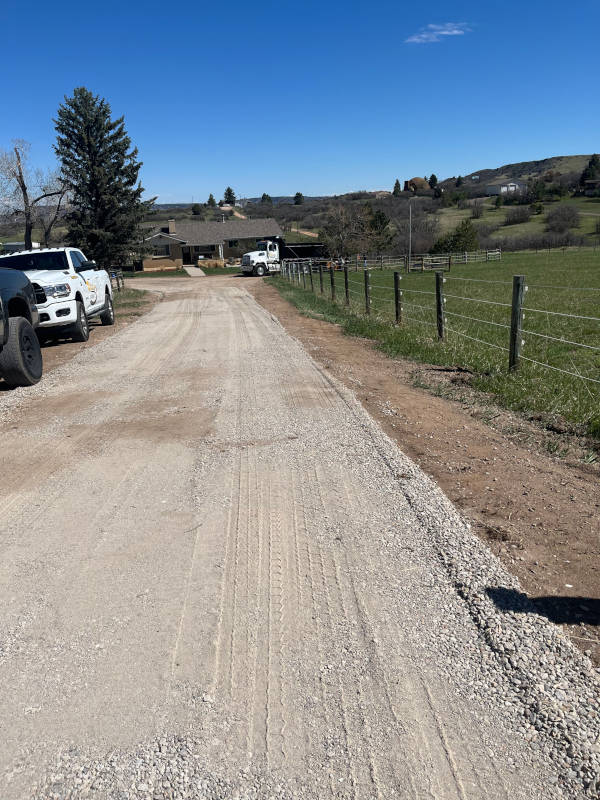
A properly built 5,000 square foot gravel driveway runs about $5,000 to $7,000 installed. That covers clearing and grading, geotextile fabric where soil conditions call for it, and roughly 115 to 130 tons of compacted crushed road base at 4 to 6 inches deep, crowned so water sheds to the sides.
The word properly matters. A dump truck spreading loose rock over dirt costs far less and fails within a season or two. What you are paying for in a real gravel installation is the compaction and the crown, not the stone.
What Gravel Actually Costs After Year One
Gravel has the lowest entry price and the highest ongoing attention. Industry maintenance figures put annual upkeep between $100 and $400 for a homeowner doing the work, or $300 to $1,500 per year when contracted out, scaling with driveway size.
- Regrading every 1 to 3 years to pull ruts, potholes, and settled low spots back flat
- Fresh material every 3 to 5 years as stone migrates, compacts, and washes downhill
- Weed control, since gravel surfaces grow vegetation through the stone
- Winter loss, because plow blades displace material with every pass and Castle Rock averages 78 inches of snow
Gravel also brings dust in dry months and mud in wet ones, and it is the hardest of the three to clear snow from cleanly. For a long approach on acreage those trade-offs are often worth it. For the 40 feet in front of a garage door, most homeowners regret it.
Recycled Asphalt Driveway Cost in Castle Rock: $6,500 to $8,500
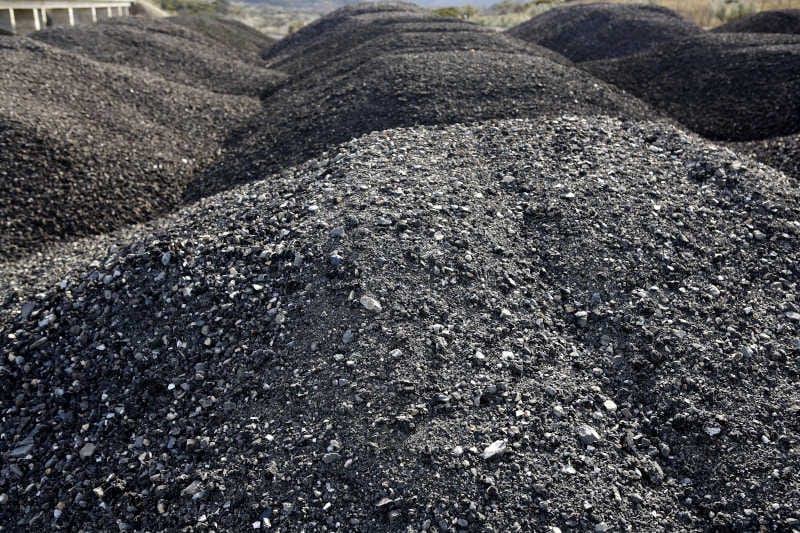
A 5,000 square foot recycled asphalt driveway typically costs $6,500 to $8,500 installed. That is roughly 20 to 30 percent more than gravel and around half the price of hot mix, which is why it has become the default upgrade for rural Douglas County properties.
What Recycled Asphalt Actually Is
Recycled asphalt, also called RAP or asphalt millings, is old pavement that has been ground up and screened for reuse. In plain terms: the road surface milled off a highway before it was repaved, crushed into a gravel-sized product.
Each particle still carries a film of the original asphalt binder. Once spread and compacted, summer heat softens that residual binder and the material knits together into a semi-solid surface. Gravel never does this. It stays loose for its entire life.
According to the National Asphalt Pavement Association and Federal Highway Administration industry survey, producers reused more than 101 million tons of reclaimed asphalt pavement in the 2024 construction season, returning over 99 percent of old asphalt to productive use and generating an estimated $4.7 billion in material savings. Asphalt remains the most recycled material in America, which is part of why it is also one of the more environmentally sound paving choices available to homeowners.
Where Recycled Asphalt Falls Short
It is not pavement, and it should not be sold as pavement. Millings produce a mottled dark brown surface with visible texture, not the uniform black of a finished driveway.
- Appearance varies batch to batch depending on the source pavement
- It needs real compaction with a roller to bond, not just spreading
- On grades above roughly 10 percent it can still shift and wash
- It loosens in the first winter before it fully sets up
- Some HOAs in Castle Pines, Lone Tree, and Highlands Ranch do not permit it on front-facing drives
Top-up intervals run about 5 to 8 years compared with 1 to 3 years for gravel, so the maintenance calendar is noticeably calmer. Check your covenants before committing, particularly on HOA properties.
Asphalt Driveway Cost in Castle Rock: $14,000 to $16,000

A new 5,000 square foot hot mix asphalt driveway in Castle Rock generally runs $14,000 to $16,000. That is roughly double recycled asphalt and close to three times gravel, and the difference is in what goes under and into the surface.
What That Price Buys
- Excavation and subgrade preparation, including removal of unsuitable soil where required
- A compacted aggregate base, typically 4 to 6 inches on residential drives, more where clay or heavy vehicles demand it
- Roughly 85 to 95 tons of hot mix asphalt placed at about 3 inches compacted thickness
- Rolling to target density, which is what determines whether the surface lasts 10 years or 25
- Grading for positive drainage plus finished edges that resist raveling
Asphalt binder is a petroleum product priced on the open market, which is the main reason hot mix costs what it does. Recycled millings carry binder that was already paid for decades ago. That single fact explains most of the gap between the two.
For context, national pricing guides put residential asphalt driveway installation at $7 to $13 per square foot on typical small driveways. Larger jobs earn a meaningfully lower rate per foot because mobilization is spread over more area, which is why a 5,000 square foot drive prices closer to $3 per square foot than $10. Our guide to installing an asphalt driveway walks through the full sequence, and this dirt driveway to asphalt conversion shows how the work looks on a real Colorado property.
The Cost Gap Narrows Over Time
The $9,000 spread between gravel and asphalt is real on installation day. It does not hold for twenty years.
Gravel is not a one-time purchase. It is a subscription. You pay again every year in regrading and replacement stone, and most gravel drives need substantial reworking within 10 to 15 years, at which point you are paying a large share of the original cost a second time.
Asphalt front-loads the spend. After that the obligation is sealcoating every 2 to 3 years and crack sealing as cracks appear, against a 20 to 30 year service life. Sealcoat is the highest-return maintenance step available in this climate, where UV exposure at altitude oxidizes binder faster than it does at sea level.
| Consideration | Gravel | Recycled Asphalt | Hot Mix Asphalt |
|---|---|---|---|
| Upfront cost | Lowest | Moderate | Highest |
| Attention required | Continuous | Occasional | Scheduled |
| Snow removal | Difficult, plows pull material | Manageable | Clean, melts faster in sun |
| Dust and mud | Significant | Minor after it sets | None |
| Curb appeal and resale | Neutral to negative in neighborhoods | Acceptable rural, mixed in subdivisions | Strongest of the three |
| Repairability | Regrade and add stone | Add material and recompact | Patch, overlay, or crack seal |
Where the math lands depends on how long you plan to own the property. Selling in three years, gravel keeps cash in your pocket. Staying fifteen, the gap closes considerably and the paved surface is usually the better buy.
Which Driveway Surface Fits Your Property?
Match the surface to how you actually use the driveway, not to the cheapest line on the estimate.
Choose gravel if
- The drive is long, rural, and low traffic, and the budget has a hard ceiling
- You own a tractor or box blade and will handle grading yourself
- The surface is temporary while you plan a paved installation later
Choose recycled asphalt if
- You want a firmer, lower-dust surface without paving cost
- The grade is moderate and the drive sees regular vehicle traffic
- You prefer a maintenance cycle measured in years rather than seasons
Choose hot mix asphalt if
- This is the driveway at your primary residence and you plan to stay
- You clear snow every winter and want a surface a plow will not destroy
- Covenants, curb appeal, or resale matter to you
- The drive carries trailers, RVs, or delivery trucks
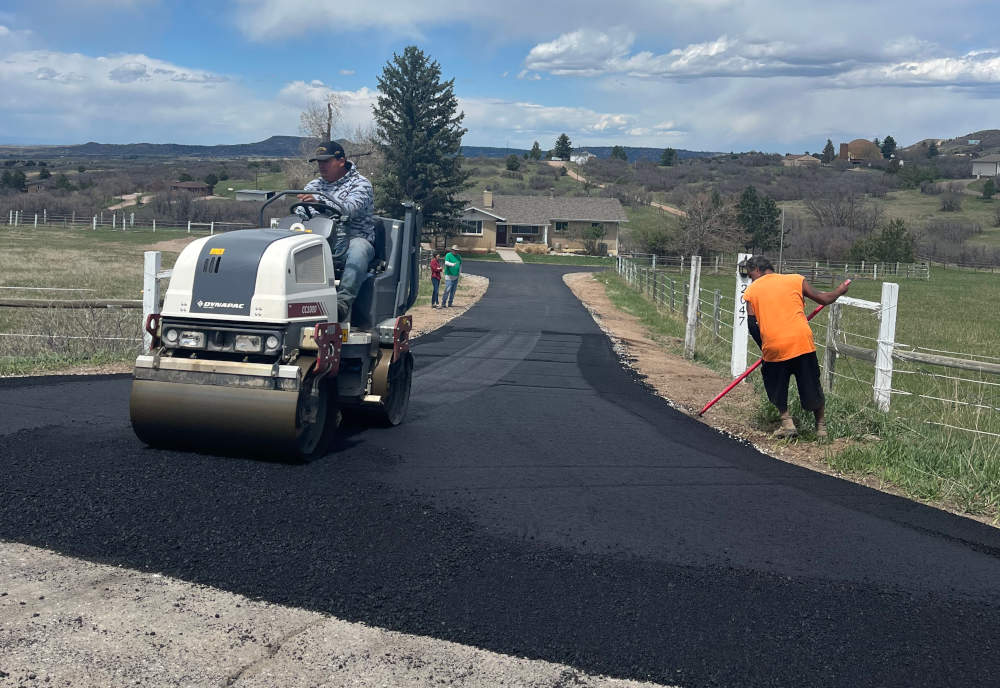
How to Compare Driveway Estimates Without Getting Burned
The lowest bid is frequently the thinnest bid. Ask every contractor the same six questions and the numbers become comparable.
- What is the compacted thickness of the surface, and is that measurement before or after rolling?
- How deep is the aggregate base, and what compaction standard are you hitting?
- How many tons of material are included in this price?
- How are you handling drainage and the crown so water leaves the surface?
- Does the price include removal and disposal of what is there now?
- What is the warranty, and are you licensed and insured in Douglas County?
If the terminology is unfamiliar, the Riley’s Asphalt glossary defines the terms that show up on paving estimates. You can also review completed projects and customer testimonials to see how quoted work turns out.
Frequently Asked Questions About Driveway Costs in Castle Rock
How much does a 5,000 square foot driveway cost in Castle Rock?
Plan on roughly $5,000 to $7,000 for gravel, $6,500 to $8,500 for recycled asphalt, and $14,000 to $16,000 for hot mix asphalt. Those ranges assume workable access and no significant drainage or excavation work. Steep grades, expansive clay, and removal of an existing surface can push any of the three higher.
Is recycled asphalt actually cheaper than new asphalt?
Yes, by roughly half. Recycled asphalt uses binder that was already paid for when the original road was built, while hot mix requires new petroleum-based binder priced at market. On a 5,000 square foot driveway that difference is typically $6,000 to $8,000.
Can you install asphalt over an existing gravel driveway?
Often yes, and it can save money. A well-compacted gravel drive already functions as an aggregate base, so the work becomes grading, proof-rolling, and paving rather than full excavation. The base has to be sound first, which requires an on-site evaluation. See our driveway replacement page for how that assessment works.
How long does each surface last in Colorado’s climate?
Gravel needs substantial rework every 10 to 15 years, recycled asphalt holds 10 to 20 years when compacted correctly, and hot mix asphalt runs 20 to 30 years with regular sealcoating. Douglas County’s 100-plus annual freeze-thaw cycles shorten every one of those numbers when drainage is poor or the base was built thin.
Why is my quote higher than my neighbor’s?
Usually slope, soil, or access. A driveway on expansive clay needs a deeper base than one on stable ground, a 10 percent grade needs more compaction and edge work than a flat approach, and a site trucks cannot reach easily costs more in labor. Removal of an existing surface commonly adds $1 to $3 per square foot on its own.
When is the best time of year to install a driveway in Castle Rock?
May through September is the reliable window, with June through August the peak for hot mix because ambient and ground temperatures support proper compaction. Gravel and recycled asphalt have wider seasonal tolerance. Booking in spring usually means better scheduling, and it lets you catch any winter damage assessment before committing to a full replacement.
Does a paved driveway add property value?
It contributes, though the effect varies by neighborhood. In subdivisions across Castle Rock, Castle Pines, and Lone Tree, a paved drive is the expectation and a gravel one reads as deferred maintenance. On rural acreage the difference matters far less to buyers.
Get a Real Number for Your Property
Ranges are useful for planning and useless for signing a contract. Riley’s Asphalt provides free on-site estimates across Castle Rock and Douglas County, including a look at drainage, grade, and base condition before any number is written down. Contact us today to get started!