
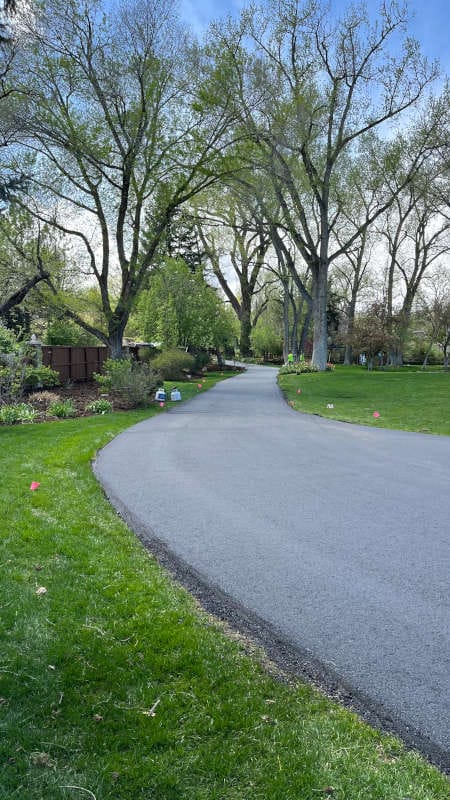
Upgrading a gravel driveway to recycled asphalt gives you a firmer, lower-dust surface for roughly half the cost of paving, while cutting maintenance from every one to three years down to every five to eight. On a 5,000 square foot driveway in Castle Rock, that means about $6,500 to $8,500 instead of $14,000 to $16,000 for hot mix.
The conversion is also cheaper than most homeowners expect, because your existing compacted gravel usually stays right where it is and becomes the base.
This guide covers the seven benefits that matter most on Front Range properties, what the conversion actually involves, and the situations where recycled asphalt is the wrong answer. Riley’s Asphalt has installed both surfaces across Douglas County for more than 30 years.
What Is Recycled Asphalt?
Recycled asphalt, known in the trade as RAP or asphalt millings, is old pavement that has been ground up and screened for reuse. In plain terms, it is the road surface milled off a highway before it was repaved, crushed down to a gravel-sized product.
The difference that matters sits on every particle. Each piece still carries a film of the original asphalt binder, the petroleum-based glue that held the road together. Spread it, compact it, and let a Colorado summer warm it, and that residual binder softens and knits the material into a semi-solid surface.
Gravel never does this. Crushed stone stays loose for its entire service life, which is the root cause of nearly every complaint homeowners have about it.
The 7 Benefits of Switching From Gravel to Recycled Asphalt
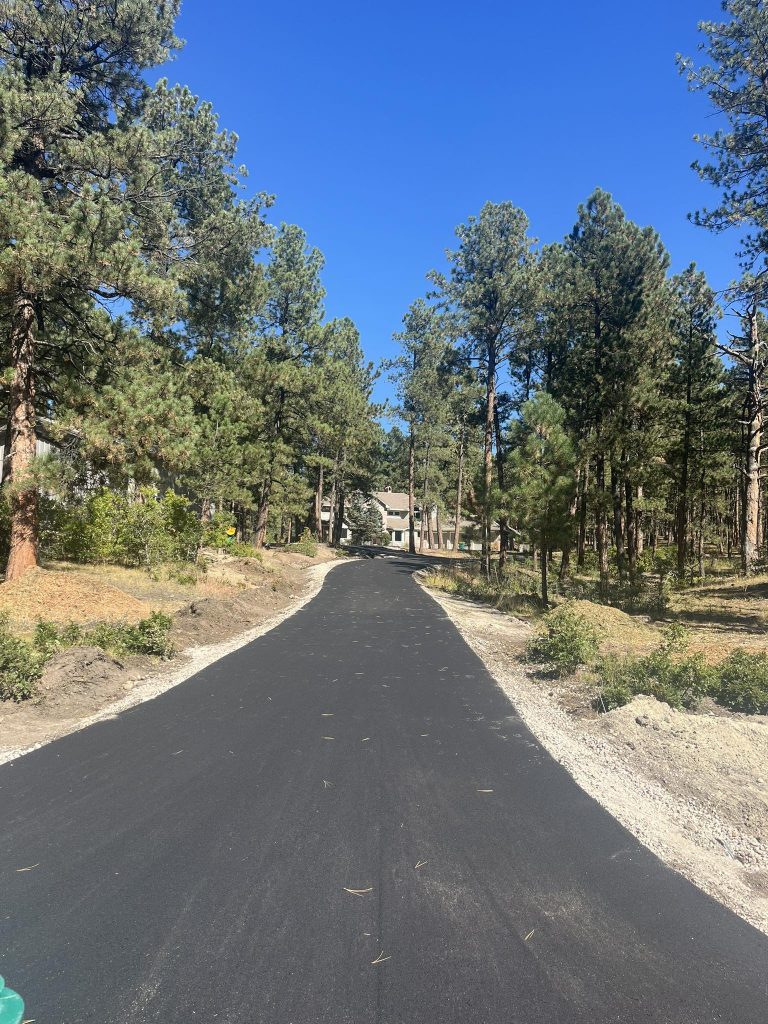
Ranked by the impact Castle Rock homeowners report most often after the conversion.
1. It Costs Roughly Half of a Paved Driveway
Recycled asphalt lands between gravel and hot mix on price, and much closer to gravel. A 5,000 square foot installation typically runs $6,500 to $8,500 against $14,000 to $16,000 for the same driveway in hot mix asphalt.
The reason is binder. Virgin asphalt requires new petroleum-based binder priced on the open market, while millings carry binder that was paid for decades ago when the original road was built. By the ton, millings commonly run $5 to $25 while clean crushed gravel runs $15 to $50, which is why the material cost is competitive with gravel in the first place. Our Colorado driveway paving cost guide breaks the full pricing picture down further.
2. Maintenance Drops From Seasonal to Occasional
This is the benefit homeowners feel most. Gravel needs regrading every one to three years and fresh material every three to five. Recycled asphalt typically needs a top-up every five to eight years and very little in between.
Industry maintenance figures put annual gravel upkeep at $100 to $400 for a homeowner doing the work and $300 to $1,500 when contracted out, scaling with driveway size. A 5,000 square foot drive sits at the upper end of both ranges.
Over a fifteen-year window, the labor difference alone often exceeds the installation cost gap. That is before counting the spring weekends spent pulling ruts out of a surface that washed downhill over winter, a pattern that shows up in nearly every spring driveway assessment we run.
3. The Surface Binds Instead of Staying Loose
Compacted millings lock together into a semi-solid mat. Gravel stays a pile of individual stones that vehicles push around every time they turn a wheel.
That single difference cascades into most of the other benefits. A bound surface resists rutting, holds its crown, sheds water instead of absorbing it, and does not migrate into your lawn or down the road with every rainstorm.
The material also continues to set. Each summer, ambient heat reactivates the binder film and the surface tightens further. A three-year-old millings driveway is meaningfully firmer than a three-month-old one.
4. Dust and Mud Largely Disappear
Castle Rock averages 243 sunny days a year and long dry stretches in summer. On gravel, that means airborne dust every time a vehicle moves, settling on cars, windows, and anything downwind.
A bound millings surface generates a fraction of that. The same holds in reverse during spring melt, when gravel turns to mud and millings stay walkable.
For properties with livestock, workshops, or anyone tracking the driveway into the house daily, this benefit alone justifies the upgrade.
5. Snow Removal Gets Easier and Costs You Less Material
Castle Rock receives roughly 78 inches of snow annually, nearly triple the U.S. average of 28 inches. Every plow pass over gravel scrapes material off the driveway and into the borrow ditch.
Homeowners on gravel effectively buy replacement stone every spring to cover what winter removed. Compacted millings hold position far better under a blade, and the loss rate drops sharply. The same physics apply to heavy vehicle traffic and plow damage on any unbound surface.
6. You Are Using the Most Recycled Material in America
According to the National Asphalt Pavement Association and Federal Highway Administration industry survey, producers reused more than 101 million tons of reclaimed asphalt pavement during the 2024 construction season, returning over 99 percent of old asphalt to productive use. That single year conserved 5.1 million tons of asphalt binder, replaced 96 million tons of virgin aggregate, and generated an estimated $4.7 billion in material cost savings. Asphalt is the most recycled material in the country by volume.
Choosing millings keeps usable material out of a landfill and avoids quarrying new stone. For homeowners weighing environmental impact alongside cost, it is the rare option where the cheaper choice is also the greener one.
7. Your Existing Gravel Usually Becomes the Base
This is the benefit most homeowners do not know about, and it is why converting from gravel costs less than starting from dirt.
A gravel driveway that has been driven on for years is already a compacted aggregate base. If it drains properly and has no soft spots, the crew grades it, proof-rolls it, and places millings directly on top. No excavation, no hauling away the old surface, no disposal fee.
Compare that to a raw dirt conversion, where excavation and base construction come first. This dirt driveway to asphalt conversion shows the additional work involved when there is nothing usable in the ground.
Gravel vs. Recycled Asphalt: Side by Side
The two materials look similar from the curb and behave nothing alike once installed.
| Factor | Gravel | Recycled Asphalt |
|---|---|---|
| Cost, 5,000 sq ft | $5,000 to $7,000 | $6,500 to $8,500 |
| Regrading interval | Every 1 to 3 years | Every 5 to 8 years |
| Surface behavior | Stays loose permanently | Binds and hardens with summer heat |
| Dust and mud | Significant year round | Minimal once set |
| Snow plowing | Heavy material loss each winter | Holds position under a blade |
| Washout on slopes | High above 6 percent grade | Moderate, manageable to about 10 percent |
| Service life | 10 to 15 years before full rework | 10 to 20 years when properly compacted |
| Appearance | Light gray, loose, visible ruts | Dark brown, textured, semi-paved look |
What the Conversion Process Looks Like
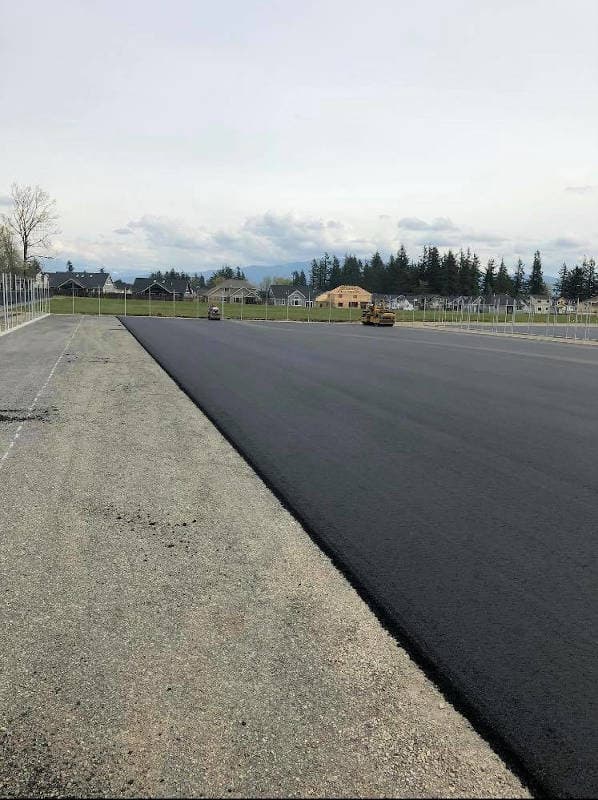
A straightforward gravel to millings conversion takes one to two days on most residential properties. Here is the sequence.
- Evaluation. The crew checks drainage, grade, and base condition, probing for soft spots and confirming the existing gravel can stay in place.
- Grading. The surface is reshaped and re-crowned so water sheds to the sides rather than pooling or running the length of the drive.
- Proof rolling. A loaded roller passes over the base to expose any areas that flex or pump, which get repaired before material goes down.
- Placement. Millings are spread at roughly 3 to 4 inches, deeper on soft ground or where heavy vehicles use the drive.
- Compaction. A vibratory roller makes multiple passes. This step separates a millings driveway that lasts fifteen years from one that ruts in the first season.
- Cure. The surface firms up over the following weeks and continues tightening through its first full summer.
Compaction is not optional. Material that is simply dumped and spread will never bond, no matter how good the millings are. If a bid does not specify rolling, it is not the same job.
Unfamiliar terms on your estimate are defined in the Riley’s Asphalt glossary, and you can see finished work across Douglas County on the past projects page.
When Recycled Asphalt Is Not the Right Choice
Millings solve a specific problem well. They are the wrong call in four situations.
- Steep grades. Above roughly 10 percent, millings can still shift and wash. Paved asphalt with proper edge containment handles slope far better.
- HOA restrictions. Some covenants in Castle Pines, Lone Tree, and Highlands Ranch do not permit millings on front-facing driveways. Check before you commit.
- Appearance-driven projects. Millings produce a mottled brown surface with visible texture, not the uniform black of finished pavement. If curb appeal is the goal, this is not the product.
- Soft or poorly drained base. If the existing gravel sits on saturated ground or has pumping soft spots, placing millings over it only buries the problem. That site needs excavation first.
In any of those cases, a full asphalt driveway or a driveway replacement is usually the better investment.
“Most of the gravel drives I look at out toward Franktown and Sedalia already have a good base under them. The homeowner has been paying to regrade that surface for ten years without realizing they were sitting on the expensive part already. Millings finish the job for a lot less than people assume.” Tom Riley, Riley’s Asphalt
Frequently Asked Questions
How much does it cost to convert a gravel driveway to recycled asphalt?
On a 5,000 square foot driveway in Castle Rock, expect roughly $6,500 to $8,500 when the existing gravel base is sound and can stay in place. Sites needing excavation, drainage work, or soft spot repair cost more. Access and haul distance also move the number.
Can recycled asphalt be laid directly over my existing gravel?
In most cases yes, and that is what makes the conversion affordable. A gravel drive that has been compacted by years of traffic functions as an aggregate base. It needs to drain properly and be free of soft spots, which a site visit confirms before any material is ordered.
How long does a recycled asphalt driveway last in Colorado?
Ten to twenty years with proper compaction, compared with 10 to 15 for gravel and 20 to 30 for hot mix asphalt. Douglas County averages more than 100 freeze-thaw cycles annually, so drainage quality has more influence on lifespan here than the material itself.
Does recycled asphalt need to be sealcoated?
It is not required the way it is on hot mix, but some homeowners sealcoat millings roughly six months after installation and every three to five years afterward to darken the surface and lock the aggregate. It is optional rather than maintenance-critical.
Will a millings driveway look like real pavement?
No, and it should not be sold that way. Expect a dark brown, textured surface that reads as semi-paved. Color varies batch to batch depending on the source pavement. It looks considerably better than gravel and noticeably less finished than hot mix.
What is the best time of year to install recycled asphalt in Castle Rock?
Late spring through early fall, with June through August ideal because summer heat helps the residual binder activate and bond. Installations later in the season still work but take longer to firm up. Book early, since crews across the Douglas County service area fill four to six weeks out during peak months.
Find Out What Your Driveway Needs
Whether your existing gravel can stay in place is the single biggest cost variable in this project, and it takes a site visit to answer. Riley’s Asphalt provides free on-site evaluations across Castle Rock, Franktown, Sedalia, Elizabeth, and Ponderosa Park. Request an estimate.
Related Riley’s Asphalt Resources
- Asphalt Millings and Recycled Asphalt Installation
- Driveway Paving Services
- Driveway Replacement
- Driveway Repair and Patching
- What It Costs to Pave a Driveway in Colorado
- Is Asphalt an Eco-Friendly Option?
- Parker Driveway Project Profile
- Customer Testimonials
- More Paving Guides on the Riley’s Blog
Sources Cited
- National Asphalt Pavement Association and Federal Highway Administration, Asphalt Pavement Industry Survey on Recycled Materials and Warm-Mix Asphalt Usage, 2024 construction season data (asphaltpavement.org)
- Federal Highway Administration, user guidelines for reclaimed asphalt pavement in pavement applications (fhwa.dot.gov)
- Hunker, Concrete vs. Gravel vs. Asphalt Driveways cost and maintenance comparison, 2026 (hunker.com)
- BestPlaces climate data for Castle Rock, Colorado, snowfall, elevation, and sunny days (bestplaces.net)
Suggested Images and Alt Text
| Image | Alt Text |
|---|---|
| Hero: compacted recycled asphalt driveway on acreage | Recycled asphalt millings driveway installed by Riley’s Asphalt near Castle Rock Colorado |
| Before and after of gravel converted to millings | Gravel driveway before and after conversion to compacted recycled asphalt millings |
| Vibratory roller compacting millings | Vibratory roller compacting recycled asphalt millings on a Douglas County driveway |
| Close up of millings texture | Close up texture of compacted asphalt millings showing bound aggregate surface |